Human Fitness Tips & Nutrition
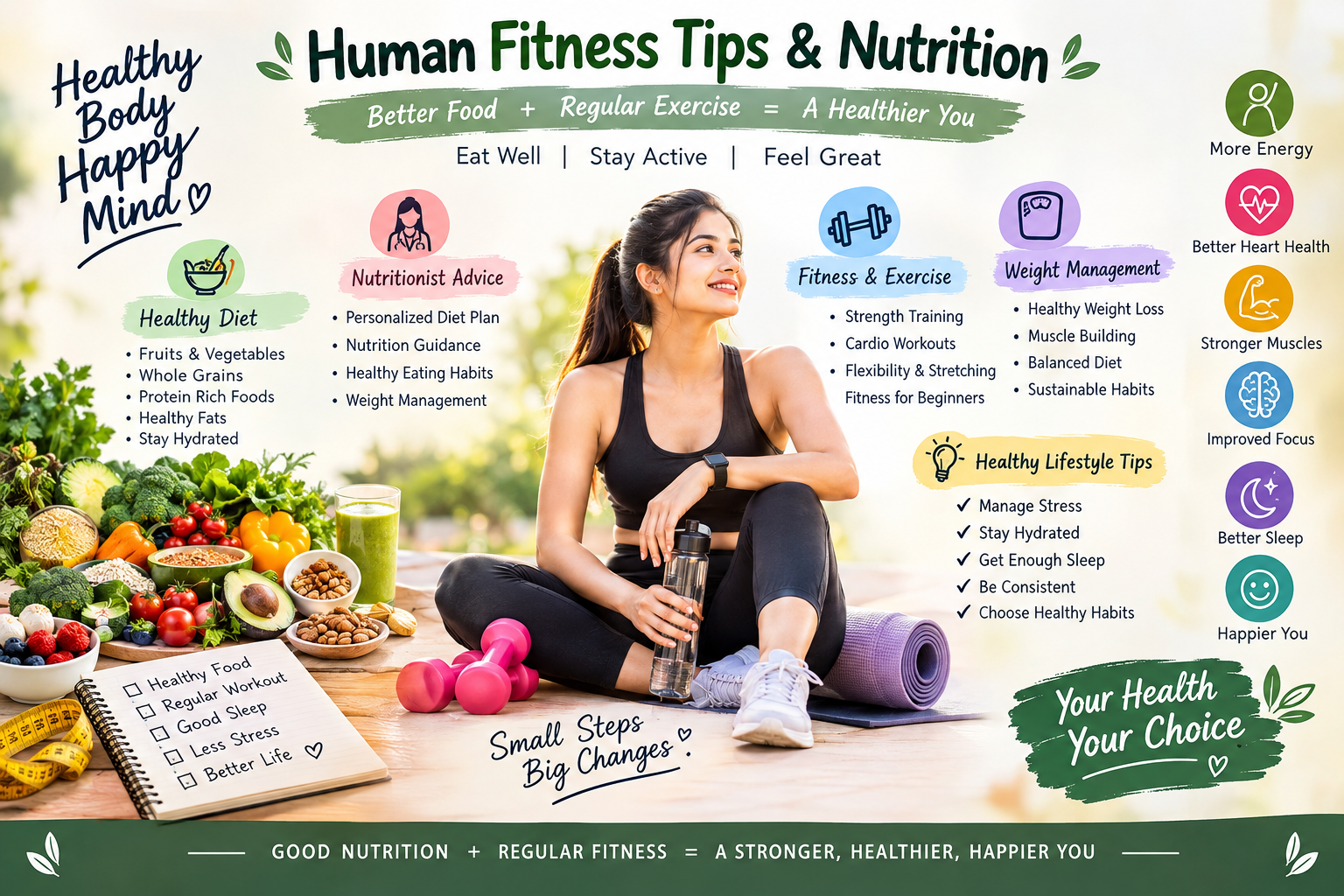
Your Complete Guide to a Healthier Lifestyle
Our fitness tips and nutrition guidance are designed to help people understand the importance of a balanced approach to health. Whether you are a beginner looking for simple fitness tips for beginners, someone interested in weight management, or a person who wants to improve strength and overall wellness, understanding your body’s nutritional and physical needs is an important first step.
A healthy lifestyle is not simply about following a strict diet or spending hours in the gym. It is about creating sustainable habits that fit comfortably into your daily routine. A qualified nutritionist can provide personalized nutrition advice, while an appropriate workout routine can help you stay physically active. Together, good nutrition and regular exercise can support your journey towards better health and fitness.
What Is a Healthy Lifestyle?
A healthy lifestyle is a combination of habits that support your physical, mental, and emotional wellbeing. It includes eating nutritious foods, staying active, getting enough sleep, drinking adequate water, managing stress, and maintaining healthy daily routines.
A balanced lifestyle does not mean completely avoiding your favorite foods or following complicated fitness programs. Instead, it means learning how to make better choices most of the time. Eating a variety of fruits, vegetables, whole grains, pulses, nuts, seeds, and protein-rich foods can help provide important nutrients.
Regular physical activity is another important part of a healthy lifestyle. Walking, cycling, stretching, dancing, sports, yoga, strength exercises, and other forms of movement can help you remain active according to your abilities and interests.
Why Nutrition Is Important for Fitness
Nutrition and fitness are closely connected. Food provides the energy and nutrients your body needs for everyday activities and physical exercise. A balanced diet can help support normal body functions and provide nutrients needed for maintaining muscles, bones, and overall health.
A nutritionist can help you understand your individual nutritional requirements and develop practical eating habits. Rather than following random diet trends found online, it is better to focus on a balanced eating pattern that is appropriate for your age, lifestyle, activity level, and personal needs.
Important components of a balanced diet include carbohydrates, protein, healthy fats, vitamins, minerals, fiber, and water. Each plays an important role in supporting overall nutrition.
Healthy Diet Tips for Everyday Life
Following a healthy diet does not have to be complicated. Start with simple and realistic changes that you can continue for the long term.
1. Include More Fruits and Vegetables
Fruits and vegetables provide important vitamins, minerals, fiber, and other nutrients. Try to include a variety of colorful vegetables and seasonal fruits in your meals.
2. Choose Nutritious Protein Sources
Protein is an important nutrient for the body. Depending on your dietary preferences, sources can include pulses, beans, lentils, dairy products, eggs, fish, poultry, nuts, seeds, and other protein-rich foods.
3. Choose Whole Grains
Whole grains such as oats, brown rice, whole-wheat products, and millets can be part of a balanced diet. They can provide carbohydrates and dietary fiber.
4. Stay Hydrated
Water is essential for the body. Drinking enough fluids throughout the day is an important part of maintaining healthy habits, especially during physical activity or hot weather.
5. Practice Balanced Eating
Instead of focusing on one particular food, concentrate on the overall quality and variety of your diet. A balanced meal can include vegetables, a protein source, whole grains or other carbohydrate sources, and appropriate healthy fats.
Fitness Tips for Beginners
Starting a fitness routine can feel challenging if you are new to exercise. The best approach is to begin gradually and choose activities that you enjoy.
Start with simple activities such as walking, gentle stretching, cycling, recreational sports, or beginner-level exercises. As your fitness level improves, you can gradually increase the duration or intensity of your activities.
Consistency is more important than trying to do too much at once. Give your body time to adapt and allow adequate recovery between demanding workouts.
If you have a medical condition, injury, or specific health concern, consult an appropriate healthcare professional before starting a new exercise program.
The Importance of Regular Exercise
Regular exercise is an important component of physical fitness. Physical activity can help support cardiovascular health, muscle strength, flexibility, mobility, and overall wellbeing.
Different forms of exercise can serve different purposes. Aerobic activities such as walking, cycling, swimming, or dancing can help improve cardiovascular fitness. Strength exercises can help develop and maintain muscle strength. Stretching and mobility exercises can support flexibility and movement.
A balanced workout routine can include different types of physical activity rather than focusing on only one exercise.
Weight Management and Healthy Habits
Weight management is an individual process influenced by many factors, including nutrition, physical activity, sleep, genetics, lifestyle, and overall health. Healthy weight management should focus on sustainable habits rather than extreme diets or rapid changes.
A nutritionist can help people understand appropriate eating patterns and develop realistic nutrition goals. Regular physical activity can also be included as part of a healthy lifestyle.
It is important to remember that health cannot be judged by body weight alone. Overall nutrition, fitness, energy levels, sleep, strength, and wellbeing are also important aspects of health.
Healthy Eating for Weight Loss
People interested in weight loss often search for quick diets or short-term solutions. However, sustainable changes are generally more useful than extreme restrictions.
A healthy approach can include eating balanced meals, choosing nutrient-rich foods, being mindful of portion sizes, staying physically active, drinking enough water, and getting adequate sleep.
Avoid relying on unverified diet claims or extremely restrictive eating plans. If you are considering significant dietary changes, professional nutrition advice can help you understand what may be appropriate for your individual situation.
Fitness and Muscle Building
Strength training can be an important part of a fitness program. Activities such as bodyweight exercises and resistance training can help support muscle strength and physical function.
People interested in muscle building should pay attention to overall nutrition, adequate protein intake, regular strength training, hydration, and recovery. Progress takes time, and fitness goals should be approached consistently rather than through extreme methods.
Beginners should learn correct exercise techniques and increase training gradually. Professional guidance can be useful when learning new exercises or designing a structured workout routine.
Importance of Sleep and Recovery
Fitness is not only about exercise. Recovery is also an essential part of a healthy lifestyle.
During rest, the body gets an opportunity to recover from daily activities and exercise. Poor sleep can affect energy, concentration, mood, and daily performance.
Try to maintain a consistent sleep schedule and create a comfortable bedtime routine. Reducing unnecessary screen time before bed, keeping your sleeping environment comfortable, and following regular sleep habits can support better rest.
Hydration and Fitness
Proper hydration is an important part of both nutrition and fitness. Your body needs water for many normal functions, and fluid requirements can vary depending on factors such as weather, physical activity, and individual needs.
Drink water regularly throughout the day and pay particular attention to hydration during physical activity and hot weather.
Rather than relying only on sugary beverages, water can be a simple everyday choice for maintaining hydration.
Stress Management and Wellness
A healthy lifestyle also includes taking care of your mental and emotional wellbeing. Stress can affect eating habits, sleep, motivation, and daily routines.
Simple activities such as walking, stretching, spending time outdoors, practicing relaxation techniques, enjoying hobbies, or talking with someone you trust can help you manage everyday stress.
Fitness should support your overall wellbeing rather than become another source of unnecessary pressure.
Nutritionist Advice for a Balanced Lifestyle
A professional nutritionist can help you understand how food choices relate to your individual lifestyle and nutritional needs. Personalized nutrition advice may be useful for people with specific goals such as improving eating habits, supporting fitness, managing weight, or planning balanced meals.
Instead of copying a diet plan designed for someone else, consider your own routine, food preferences, activity level, and nutritional requirements.
A good nutrition plan should be practical enough to follow consistently. It should also focus on variety and adequate nutrition rather than unnecessary restrictions.
Simple Daily Fitness Routine
Creating a simple daily routine can make it easier to remain active.
You can begin your day with light stretching or a short walk. During the day, avoid sitting continuously for long periods when possible and include movement breaks.
You can also schedule a regular workout according to your fitness level. This could include walking, cycling, strength exercises, yoga, stretching, or recreational activities.
The most suitable routine is one that you can perform safely and consistently.
Fitness Tips for Busy People
A busy schedule does not necessarily mean you cannot stay active. Small amounts of movement throughout the day can contribute to an active lifestyle.
Take short walking breaks, use stairs when appropriate, stretch during breaks, walk while talking on the phone, or schedule short workouts when you have time.
The goal is to make physical activity a regular part of your lifestyle rather than something you do only occasionally.
Healthy Lifestyle Tips for Families
Healthy habits can be easier to maintain when the entire family participates. Families can prepare balanced meals together, spend time outdoors, participate in sports, go for walks, and encourage healthy eating habits.
Children and teenagers have different nutritional and physical activity needs, so their diet and exercise routines should be appropriate for their age and development.
Creating a positive environment around food and fitness is more helpful than using strict rules or negative comments about body size.
Common Fitness Mistakes to Avoid
Many people make common mistakes when starting a fitness journey. One mistake is trying to achieve results too quickly. Another is exercising without allowing adequate recovery.
Following extreme diets, skipping meals unnecessarily, copying another person’s workout, ignoring proper exercise technique, and relying on unverified online health claims can also create problems.
Focus on gradual progress, balanced nutrition, proper recovery, and realistic goals.
Building Long-Term Healthy Habits
The most effective fitness journey is one that can become part of your lifestyle. Instead of making many dramatic changes at once, start with a few manageable habits.
You could begin by drinking more water, adding vegetables to meals, walking regularly, improving your sleep schedule, or establishing a consistent workout routine.
Once these habits become comfortable, you can gradually introduce additional healthy changes.
Frequently Asked Questions About Nutrition and Fitness
What is the best diet for fitness?
There is no single diet that is suitable for everyone. A balanced eating pattern containing a variety of nutritious foods can support general health and fitness. Individual dietary needs can vary, so personalized advice from a qualified professional may be useful.
How often should beginners exercise?
Exercise frequency depends on age, fitness level, health status, and goals. Beginners should start gradually and increase activity according to their abilities while allowing adequate recovery.
Can nutrition help with weight management?
Balanced nutrition is an important component of weight management. Healthy eating habits, physical activity, sleep, and other lifestyle factors can all contribute to overall health.
Is exercise enough for a healthy lifestyle?
Exercise is important, but a healthy lifestyle involves more than physical activity. Nutrition, hydration, sleep, stress management, and other daily habits also matter.
Should I follow a diet from the internet?
Not every diet available online is appropriate for every person. It is better to evaluate health information carefully and seek professional nutrition advice when necessary.
Start Your Fitness and Nutrition Journey Today
Building a healthier lifestyle is a journey rather than a one-day transformation. You do not need to change everything immediately. Begin with small steps, create realistic goals, stay consistent, and learn what works best for your lifestyle.
Whether your interest is fitness tips, healthy diet plans, nutrition advice, weight management, weight loss, muscle building, workout routines, exercise for beginners, healthy eating, or overall wellness, developing balanced habits can help you make more informed choices about your health.
Remember that every individual has different nutritional and fitness needs. A qualified nutritionist or appropriate healthcare professional can provide personalized guidance based on your circumstances.
Take the first step today: eat mindfully, stay active, stay hydrated, get enough rest, and make your health a regular part of your daily routine. A balanced combination of nutrition and fitness can become a sustainable foundation for a healthier and more active lifestyle.